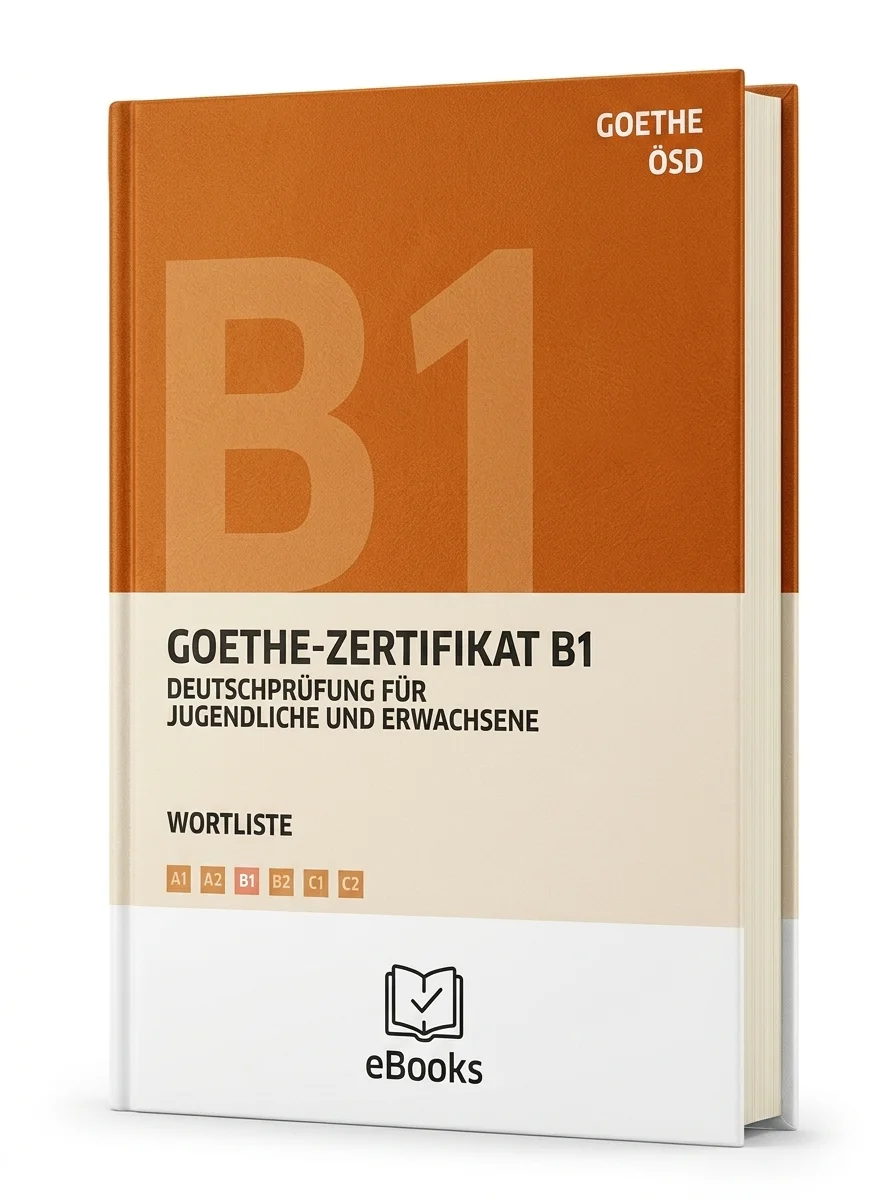
Goethe Zertifikat B1 Deutschprüfung Für Jugendliche Und Erwachsene is the comprehensive official handbook describing the intermediate German exam for learners aged 12 and above. This book outlines all test objectives, task types, and scoring criteria for the B1 level, which marks the transition from basic to independent language use. Unlike lower levels, B1 requires handling familiar topics with reasonable fluency, such as describing experiences, expressing opinions, and writing personal letters. The guide emphasizes real-world communication for both teenagers in school and adults in professional settings, making it essential for anyone targeting the B1 certification.
Listening and Reading Module Specifications
Goethe Zertifikat B1 Deutschprüfung Für Jugendliche Und Erwachsene specifies listening tasks involving announcements, radio reports, and conversations with opinions. Candidates must identify main ideas, specific details, and speaker attitudes. The reading section includes newspaper articles, blog posts, and formal emails, requiring understanding of arguments and implicit meanings. Both modules test vocabulary on topics like travel, health, and workplace. Preparation must focus on recognizing colloquial expressions and logical connectors like “obwohl” and “trotzdem.” Ignoring these specific task types leads to failure, as the exam avoids simple matching questions found at A1-A2 levels.
Writing and Speaking Performance Standards
The writing module contains two parts: a personal letter and an informal message or opinion piece. Goethe Zertifikat B1 Deutschprüfung Für Jugendliche Und Erwachsene requires 100-120 words total, testing vocabulary range, grammar accuracy (subjunctive II, passive voice), and coherence. Speaking involves three parts: self-introduction, a short presentation, and partnered problem-solving. Candidates must express wishes, justify opinions, and suggest alternatives. Examiners evaluate fluency more than perfection, but persistent errors in verb position or adjective endings cause point deductions. Mastering task-specific phrases like “Meiner Meinung nach” and “Ich schlage vor” guarantees better performance.
Test Structure and Time Allocation
The exam divides into written (150 minutes) and oral (15 minutes) parts. Reading and listening use multiple-choice, matching, and true/false tasks. Goethe Zertifikat B1 Deutschprüfung Für Jugendliche Und Erwachsene emphasizes that writing time must be managed carefully: 15 minutes for planning, 20 for drafting, 10 for revision. Speaking preparation occurs in a separate room, allowing thinking time. Unlike A2, this level includes an oral presentation lasting two minutes. Knowing this structure prevents panic: candidates should never memorize entire speeches but rather flexible outlines. The guide provides sample timetables for effective rehearsal.
Scoring System and Preparation Strategies
Each of the four modules requires approximately 60% to pass, but modules can be retaken individually. Goethe Zertifikat B1 Deutschprüfung Für Jugendliche Und Erwachsene reveals that speaking and writing carry equal weight. To apply the guide effectively, practice writing one argumentative paragraph daily using “weil” and “deshalb.” For speaking, rehearse 90-second mini-presentations on topics like “my favorite city.” Focus on common B1 grammar: comparative forms, temporal clauses (bevor, nachdem), and passive voice in present tense. Do not ignore subjunctive II for polite requests (würde, könnte). After four to six months of systematic drills, determined learners can reliably pass.